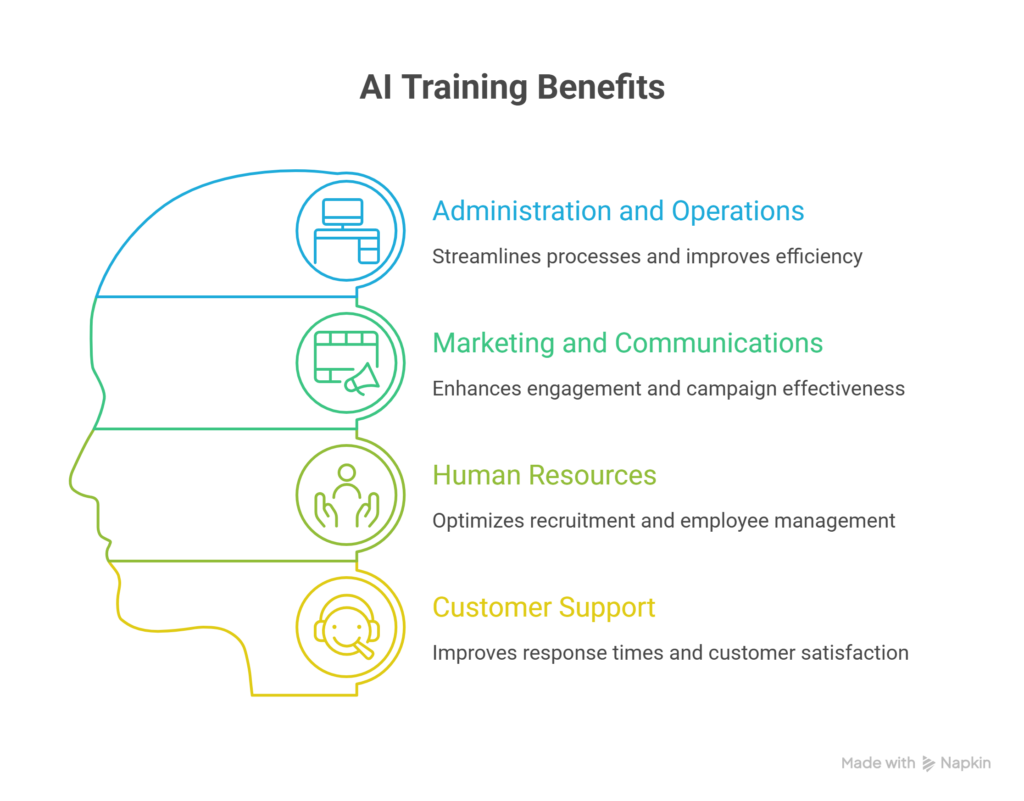
AI course in Malaysia refers to structured training programs that help organizations and professionals apply artificial intelligence safely and productively in real workflows. These programs typically cover generative AI usage, prompt design, data handling, and basic automation so teams can reduce manual work, improve document quality, and standardize outputs. In the Malaysian context, effective training also emphasizes responsible use, data privacy, and alignment with workplace policies, especially for corporate and public sector environments. This approach is most relevant for teams in administration, marketing, HR, operations, and customer support who need practical skills rather than theory alone. By understanding both the capabilities and limits of AI tools, organizations can avoid risky “shadow AI” practices while still capturing measurable productivity gains across daily processes.
This overview describes general training scope and does not replace formal organizational policies or governance frameworks.
What An AI Course In Malaysia Typically Covers
An AI Course In Malaysia designed for real organizational use goes beyond simple tool demonstrations. It focuses on how artificial intelligence fits into everyday work, decision-making, and internal standards rather than isolated experimentation.
Most structured programs under an AI Course In Malaysia introduce generative AI for office productivity, showing how teams can draft documents, summarize reports, and prepare presentations more efficiently. This is often paired with prompt design techniques that help users achieve consistent, repeatable outputs rather than unpredictable results.
Another core area in an AI Course In Malaysia is basic automation and workflow thinking. Instead of treating AI as a standalone tool, participants learn how it can support routine processes such as email handling, internal data preparation, and knowledge management. This approach positions AI as part of the organization’s operational framework.
Courses in Malaysia also commonly address data handling and responsible use. This includes guidance on what information should or should not be shared with AI systems, how to manage internal documents safely, and how to align usage with company or agency policies within an AI Course In Malaysia.
For organizations mapping this into a formal rollout, a structured overview of organizational AI training frameworks can help align learning objectives with internal standards and long-term adoption plans.
👉 Kursus AI
Teams And Roles That Benefit Most From AI Training
An AI Course In Malaysia is not limited to technical staff. In many organizations, the greatest productivity gains come from non-technical teams that handle large volumes of information, communication, and internal coordination.
Data Privacy, Internal Policies, And Responsible AI Use
One of the most important elements of an AI Course In Malaysia is governance. Many organizations face operational risk not from the technology itself, but from unregulated or informal usage by staff.
This is often referred to as “Shadow AI”, where employees use personal accounts or unapproved tools to process work-related information. Without guidance, this can lead to data exposure, inconsistent records, and policy violations that an AI Course In Malaysia is designed to prevent.
A structured training program addresses these risks by helping teams understand how to align AI usage with internal policies. Participants learn what types of data are appropriate to process, how to maintain confidentiality, and how to document AI-assisted work properly as part of an AI Course In Malaysia governance layer.
This governance layer is especially relevant for organizations that handle sensitive records, regulated information, or public-facing communication. Responsible AI use ensures that productivity gains do not come at the cost of compliance, auditability, or long-term trust.
How To Evaluate An AI Training Provider In Malaysia
Choosing a training provider is not only about course length or topic lists. Organizations often assess how well an AI Course In Malaysia fits their operational context and long-term capability building.
- Practical Versus Theory-Based Programs
Practical programs focus on real tasks, internal documents, and workflows that participants recognize from their daily work. Theory-based programs may support general understanding but often require additional effort to translate into measurable results within an AI Course In Malaysia. - Local Relevance And Industry Context
Training that reflects how Malaysian organizations operate, including workplace culture and regulatory expectations, is usually easier to implement consistently across teams. - Post-Training Support And Documentation
Many organizations value reference materials, internal guidelines, or follow-up sessions that help maintain standards after the initial AI Course In Malaysia ends.
Connecting AI Training With Broader Technical Skills
While many programs focus on productivity and communication, some organizations explore deeper technical areas as part of their long-term development plans and digital strategy around an AI Course In Malaysia.
- Security And Information Governance
Teams concerned with system integrity and data protection often review Cybersecurity Course Malaysia content to understand how AI tools interact with access control, internal security policies, and information governance frameworks. - Analytics And Decision Support
For analytical and planning roles, exposure to Data Science Course Malaysia and Data Analytics Course Malaysia pathways helps teams interpret operational data, performance indicators, and reporting trends more effectively. - Automation And Predictive Systems
Technical and product-focused teams may look into Machine Learning Course Malaysia concepts to better understand how predictive systems and automation logic operate behind the scenes. - Workflow Integration And Orchestration
Organizations that introduce automation platforms often reference n8n Course Malaysia materials to see how AI can integrate into structured business processes rather than operate as a standalone tool.
From Awareness To Structured AI Adoption In The Workplace
The transition from basic awareness to structured adoption happens in stages. Teams first learn what AI can and cannot do. This builds confidence without creating unrealistic expectations in an AI Course In Malaysia setting.
Next, organizations define internal standards. These include approved tools, usage guidelines, and documentation practices. AI then becomes part of daily operations, not an optional add-on supported by an AI Course In Malaysia framework.
Finally, teams link AI usage to performance goals. Examples include reducing document preparation time, improving response consistency, and standardizing internal communication. This makes impact measurable over time.
Frequently Asked Questions
What Is An AI Course In Malaysia?
A structured program that teaches teams to use AI tools responsibly and effectively for real workplace tasks, productivity, and governance.
Who Should Attend AI Training Programs?
Administrative, operations, marketing, HR, customer support, management, and technical teams involved in data, automation, or internal systems.
How Do Organizations Manage Data Privacy When Using AI Tools?
By setting approved tools, clear data-handling rules, and training staff to avoid sharing sensitive or confidential information.
How Organizations Set Internal Standards Before Rolling Out AI Training?
By defining usage guidelines, documentation practices, and accountability roles before training begins.
Explore Structured AI Training Options For Organizations
Discuss how your organization can structure AI training and implementation frameworks based on team roles, data governance, and internal policies.
👉 http://kursusaimy.wasap.my
Request access to the current AI training framework reference used by selected teams and departments this quarter.
👉 http://kursusaimy.wasap.my