Understanding the data Science course structure Malaysia providers use is critical for anyone planning a serious career in data Science. Many people compare course prices or course duration, but very few actually examine how the curriculum is structured, what skills are built at each stage, and how well the structure matches real industry needs in Malaysia.
A well-designed data Science course structure Malaysia is not just a list of topics. It is a progressive learning framework that takes learners from foundational thinking to applied problem-solving, using tools and datasets relevant to the local job market. This article explains how data science courses in Malaysia are typically structured, what modules matter most, and how to evaluate whether a course is truly industry-ready.
What Is a Data Science Course Structure?
A data Science course structure Malaysia refers to how learning content is organised, sequenced, and delivered throughout a data Science programme. This includes the order of modules, the balance between theory and practice, assessment methods, and how skills build on each other over time.
In Malaysia, most reputable data science programmes follow a layered structure. Students do not jump directly into advanced machine learning. Instead, they progress through core foundations such as data literacy, programming, statistics, and business context before handling complex models.
A clear data Science course structure Malaysia ensures learners develop both technical competence and decision-making ability, which employers increasingly expect from data professionals.
Why Course Structure Matters More Than Course Length
Many prospective students ask how long a data Science course should be. Duration alone is not a reliable indicator of quality. What matters more is whether the data Science course structure Malaysia aligns learning outcomes with real job roles.
A short course with poor structure often produces learners who know isolated tools but cannot solve real problems. In contrast, a properly structured programme focuses on:
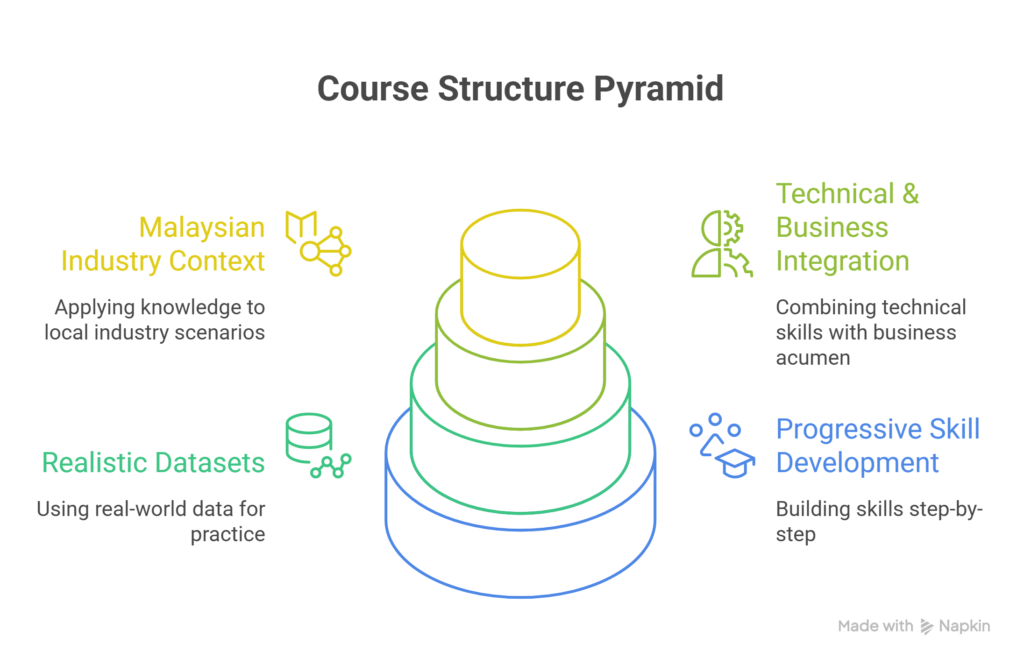
The data Science course structure Malaysia used by serious providers is designed to reduce skill gaps between training and employment.
Typical Phases in a Data Science Course Structure in Malaysia
While course providers differ in presentation, most effective programmes follow a similar underlying structure. Understanding these phases helps you evaluate whether a course is worth your time.
Phase 1: Data Foundations and Analytical Thinking
The first phase of a data Science course structure Malaysia focuses on foundational concepts. This stage is critical for beginners and career switchers.
Key topics usually include:
- Introduction to data Science and data-driven decision-making
- Types of data (structured, semi-structured, unstructured)
- Basic data ethics and data governance
- Analytical thinking and problem framing
This phase ensures learners understand what data Science actually is, not just the tools associated with it. Without this foundation, later technical modules become difficult to apply correctly.
Phase 2: Programming and Data Manipulation
The second phase of a data Science course structure Malaysia introduces core programming skills, most commonly using Python. This phase is hands-on and skill-intensive.
Common learning outcomes include:
- Python fundamentals for data analysis
- Data manipulation using libraries such as pandas and NumPy
- Working with datasets from CSV files, databases, or APIs
- Basic data cleaning and transformation
At this stage, learners begin handling real datasets rather than theoretical examples. A strong data Science course structure Malaysia ensures programming is taught in a data context, not as abstract coding lessons.
Phase 3: Statistics and Exploratory Data Analysis
Statistics form the backbone of data Science. In a proper data Science course structure Malaysia, statistics is not treated as pure mathematics but as a decision-making tool.
Topics typically include:
- Descriptive and inferential statistics
- Probability concepts relevant to data analysis
- Data visualisation and exploratory analysis
- Interpreting trends, patterns, and anomalies
This phase helps learners understand why results appear the way they do and how to communicate findings clearly to stakeholders.
Phase 4: Machine Learning and Predictive Modelling
Machine learning is often the most anticipated part of a data Science course. However, in a well-designed data Science course structure Malaysia, machine learning comes only after strong foundations are established.
Typical coverage includes:
- Supervised and unsupervised learning concepts
- Regression, classification, and clustering models
- Model evaluation and performance metrics
- Avoiding overfitting and bias
Rather than focusing on theory alone, effective courses emphasise practical model building and interpretation within business scenarios relevant to Malaysia.
Phase 5: Applied Projects and Real-World Use Cases
The final phase of a data Science course structure Malaysia usually involves applied projects. This is where learners integrate all previous skills into realistic problem-solving tasks.
Projects may involve:
- Business or industry datasets
- End-to-end data workflows
- Presenting insights to non-technical audiences
- Justifying model choices and recommendations
This phase is critical for employability. Employers value candidates who can demonstrate applied experience, not just completed modules.
Want to Explore Related Learning Paths?
If you are still comparing different data-focused career tracks, you may find it useful to review structured learning options in:
👉 Data Analytics Course in Malaysia
👉 Cybersecurity Course in Malaysia
These paths often intersect with data science and can complement your long-term career goals.
What to Look for When Evaluating a Data Science Course Structure in Malaysia
Not all courses marketed as data Science programmes follow a proper structure. When evaluating a data Science course structure Malaysia, consider the following:
- Is there a clear progression from fundamentals to advanced topics?
- Does the course balance theory with practical application?
- Are real datasets and projects included?
- Is the curriculum aligned with Malaysian industry needs?
- Are soft skills such as communication and problem framing addressed?
A transparent structure is often a sign of a mature and well-designed programme.
Common Mistakes in Poorly Designed Course Structures
Some programmes fail not because of content, but because of weak structure. Common issues include:
- Teaching machine learning before statistics
- Focusing too much on tools without context
- Lack of applied projects
- No integration between modules
A weak data Science course structure Malaysia leads to fragmented knowledge that is difficult to apply in real jobs.
Who Benefits Most from a Structured Data Science Curriculum?
A well-designed data Science course structure Malaysia benefits several groups:
- Career switchers transitioning into tech roles
- Working professionals upgrading analytical skills
- Graduates seeking industry-relevant experience
- Managers who need to understand data-driven decision-making
Structure matters regardless of background. It determines how quickly and effectively learners gain confidence and competence.
Frequently Asked Questions About Data Science Course Structure in Malaysia
What is the typical data Science course structure in Malaysia?
A typical data Science course structure in Malaysia starts with data fundamentals and programming, followed by statistics, machine learning, and applied projects. Most structured programmes are designed to progressively build skills rather than teaching tools in isolation.
How long does it take to complete a data Science course in Malaysia?
The duration depends on the course format and depth. Many programmes range from a few months to over a year, but the effectiveness depends more on the course structure than total length.
Is a data Science course structure in Malaysia suitable for beginners?
Yes, many data Science courses in Malaysia are structured to accommodate beginners. They usually begin with foundational concepts before moving into more advanced topics like machine learning and predictive modelling.
Does a data Science course structure in Malaysia focus more on theory or practical skills?
Most industry-aligned courses balance theory and practical application. A strong data Science course structure in Malaysia includes hands-on projects using real datasets alongside conceptual learning.
Final Thoughts on Data Science Course Structure in Malaysia
Choosing a data Science programme should not be based on marketing claims alone. Understanding the data Science course structure Malaysia providers use gives you deeper insight into the quality, relevance, and long-term value of the course.
A strong structure builds skills progressively, integrates theory with practice, and prepares learners for real-world challenges in the Malaysian job market. By focusing on structure rather than hype, you can make a more informed and strategic learning decision.
For more information on courses, career opportunities, or expert guidance, don’t hesitate to reach out to the KursusAI.my team. Start your learning journey today!
👉 Start Here: Data Science Course Malaysia
👉 Chat on WhatsApp with Ms Yasmin