Choosing the right analytics training goes beyond course duration or certificates. What truly determines career readiness is whether the learning experience is practical, applied, and aligned with real-world problems. This is why interest in a hands on data analytics course Malaysia has grown rapidly among students, professionals, and career switchers.
A hands-on approach ensures learners do not just understand concepts but can actually work with data, interpret insights, and support business decisions. This article explains what a hands on data analytics course Malaysia typically looks like, how it is structured, and why practical learning matters in the Malaysian job market.
What Does “Hands-On” Mean in Data Analytics?
A hands on data analytics course Malaysia focuses on applied learning rather than theory-heavy instruction. Instead of spending most of the time on definitions or formulas, learners actively work with datasets, tools, and realistic business scenarios.
Hands-on learning usually involves:
- Working with real or simulated datasets
- Performing data cleaning and transformation tasks
- Building reports, dashboards, or analytical models
- Interpreting results and explaining insights
This approach mirrors how data analysts operate in real organisations, making the learning process more relevant and job-oriented.
Why Hands-On Data Analytics Matters in Malaysia’s Job Market
Malaysia’s data and technology job market increasingly values practical skills. Employers want candidates who can contribute quickly, not just those who understand concepts at a high level. A hands on data analytics course Malaysia helps bridge this gap.
Many local employers expect data analysts to:
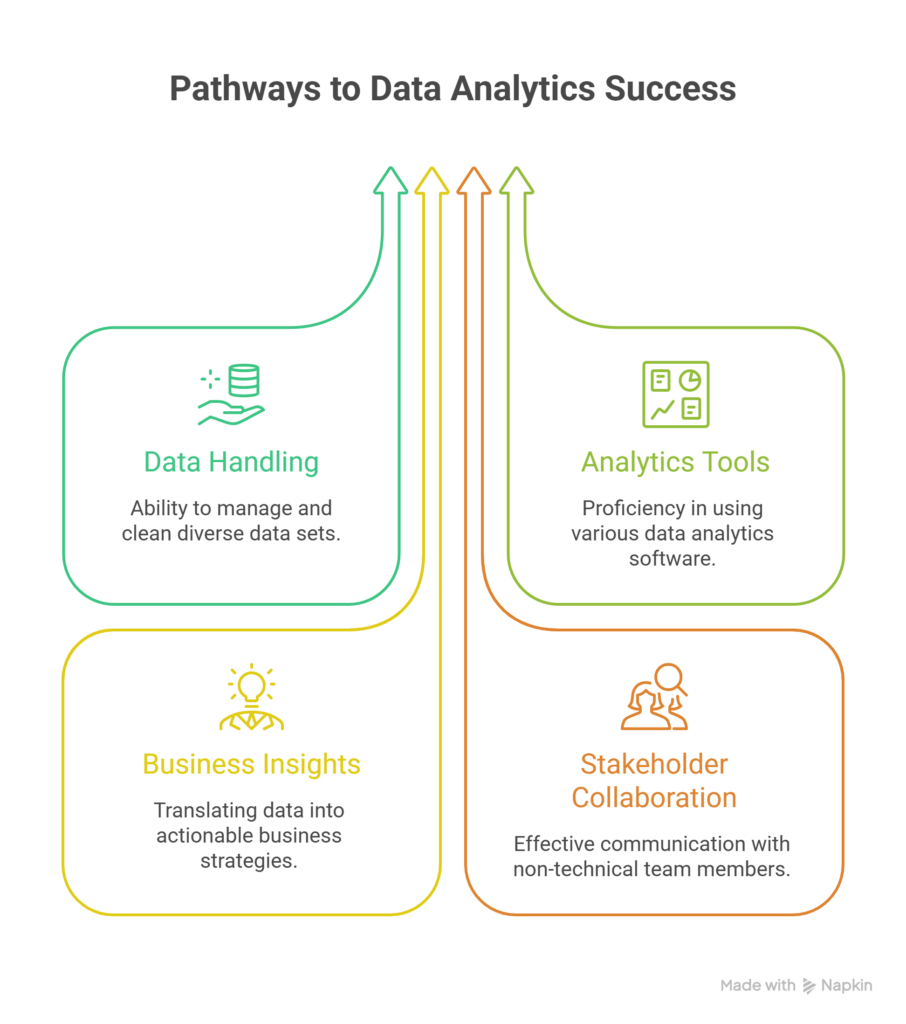
Courses that emphasise hands-on work better prepare learners for these expectations, especially in industries such as finance, e-commerce, healthcare, logistics, and technology.
Typical Structure of a Hands-On Data Analytics Course in Malaysia
While providers vary, a well-designed hands on data analytics course Malaysia usually follows a structured progression. Each stage builds on the previous one to develop practical competence.
Foundation Stage: Data Thinking and Analytics Basics
The first stage introduces learners to the role of data analytics in decision-making. This includes:
- Understanding what data analytics is and how it is used
- Basic data concepts and data types
- Analytical thinking and problem framing
Even in a hands-on course, this foundation is essential. It ensures learners know why they are analysing data, not just how.
Tools and Data Handling
The next phase of a hands on data analytics course Malaysia focuses on tools commonly used by data analysts. Learners typically practice:
- Spreadsheet-based analysis
- SQL or database querying basics
- Python or similar tools for data manipulation
Hands-on exercises involve importing datasets, cleaning data, and preparing it for analysis. This is where learners start developing real technical confidence.
Exploratory Data Analysis and Visualisation
Data visualisation is a core skill for analysts. A strong hands on data analytics course Malaysia places heavy emphasis on:
- Exploratory data analysis
- Identifying trends and patterns
- Creating charts, dashboards, and reports
- Communicating findings clearly
Rather than memorising chart types, learners practise choosing the right visual for each analytical question.
Applied Projects and Case Studies
The defining feature of a hands on data analytics course Malaysia is applied project work. This stage often includes:
- End-to-end analytics projects
- Business or industry case studies
- Group or individual project work
- Presenting insights and recommendations
Projects help learners connect tools, data, and decision-making into a single workflow, similar to what is expected in real roles.
How Hands-On Analytics Differs from Data Science Training
Although related, analytics and data science serve different purposes. A hands on data analytics course Malaysia focuses more on descriptive and diagnostic analysis, while data science extends into predictive and advanced modelling.
Analytics courses typically emphasise:
- Business intelligence and reporting
- Operational and performance analysis
- Supporting decisions with data
For learners who later want to move into broader or more technical roles, analytics often becomes a stepping stone. Understanding this distinction helps learners choose the right starting point.
If you want a deeper look at how analytics programmes are structured, you can explore this detailed overview of a data analytics course in Malaysia, which focuses on practical skills and job-ready outcomes:
👉 Data Analytics Course in Malaysia
How Hands-On Analytics Skills Connect to Cybersecurity and Risk
Data analytics skills are increasingly applied beyond traditional business reporting. In areas such as cybersecurity, analytics is used to identify unusual behaviour, monitor systems, and support risk assessment.
A hands on data analytics course Malaysia may indirectly support skills such as:
- Pattern recognition
- Anomaly detection
- Data-driven risk analysis
These skills are relevant in security-focused roles, where understanding data behaviour is critical. Learners interested in security applications can also review how structured technical training applies in this area through a cybersecurity course in Malaysia:
👉 Cybersecurity Course in Malaysia
Who Should Consider a Hands-On Data Analytics Course in Malaysia?
A hands on data analytics course Malaysia is particularly suitable for:
- Beginners seeking practical, job-ready skills
- Working professionals upgrading analytical capabilities
- Career switchers moving into data-related roles
- Business professionals who work closely with data teams
Because the learning is applied, it reduces the gap between training and real-world expectations.
Common Pitfalls in Poorly Designed Hands-On Courses
Not all courses marketed as “hands-on” deliver real practical value. Weak programmes often:
- Use toy datasets that do not reflect reality
- Focus too heavily on tools without context
- Skip interpretation and communication skills
- Lack structured projects
A high-quality hands on data analytics course Malaysia avoids these issues by integrating tools, data, and business thinking throughout the curriculum.
Evaluating Whether a Course Is Truly Hands-On
When assessing a hands on data analytics course Malaysia, consider asking:
- How much of the course involves practical exercises?
- Are there real projects or case studies?
- Do learners work with realistic datasets?
- Is feedback provided on analysis and insights?
Clear answers to these questions usually indicate a stronger learning experience.
How Hands-On Analytics Supports Broader Data Careers
Analytics skills often form the foundation for broader data roles. Many professionals begin with analytics before expanding into advanced areas such as data science, machine learning, or AI.
A well-structured hands on data analytics course Malaysia helps learners:
- Build confidence working with data
- Understand business problem-solving
- Prepare for more advanced technical learning
This makes analytics a strategic entry point into the wider data ecosystem.
Final Thoughts on Hands-On Data Analytics Courses in Malaysia
Choosing the right training requires more than comparing course names. Understanding what a hands on data analytics course Malaysia actually delivers helps you evaluate whether it aligns with your career goals.
Practical learning, applied projects, and real-world relevance are what transform knowledge into capability. A genuinely hands-on course prepares learners not just to pass assessments, but to contribute meaningfully in data-driven roles across Malaysia’s growing digital economy.
Need Help Clarifying Your Learning Path?
If you are unsure whether a hands on data analytics course Malaysia aligns with your background or career direction, getting clarity early can be helpful. You can speak with the KursusAI.my team on WhatsApp to explore suitable learning paths:
👉 Start Here: Data Analytics Course Malaysia
👉 Chat on WhatsApp with Ms Yasmin